

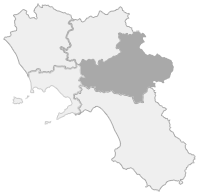
Nestled for a thousand years around its castle on the tuff rock that rises 657 meters in the upper Ufita Valley, the stone village of Zungoli overlooks Irpinia and the Foggia plain from a strategic position that determined its formation on the great communication routes of antiquity.
These routes were regularly traveled by people and flocks even further back, when this area, now on the border between Campania and Puglia, began to host the first Neolithic settlements, of which important remains have emerged. And in Roman times, the Via Herculea passed through here, a crucial link between the Via Traiana and the Via Appia, which ran through the Apennines to the Adriatic.
In the heart of the Norman Barony, on a cliff flanked by the Vallone stream, an imposing castle was built in the 11th century, with four mighty towers flanking the fortified walls. This construction, called Castrum Curoli, has been attributed to the Norman leader Leander Junculo or Curolo, from whose name the toponym Zungoli derives. Others instead trace it back to the Byzantine Greek "Tsungos."
And the fortress was built precisely as an anti-Byzantine structure. Around it, following a widespread pattern in medieval Irpinia, the village, built with local stone, first began to form and then gradually expanded. The same one that is still the protagonist everywhere: on the walls of the houses, in the cobblestones of the rue, the little streets that intersect and climb towards the castle, on the stairways that connect the various points of the town, on the arches and on the so-called "pont houses" typical of Zungoli.
A landmark building, also visually striking because it continues to soar above the rooftops of the surrounding village, the Castle takes its name today from the family of the Susanna di Sant'Eligio marquises, who have owned it since the 19th century, when they took over from the noble Loffredo family, who had owned it since the 16th century. Before them, going back in time, the manor had belonged to the viceroy Consalvo of Cordova and the Del Balzo family. It was the Loffredos, when the original defensive and military needs ceased to exist, who transformed the fortress into a noble residence. From the rooms on the main floor, which also feature a monumental fireplace, you can admire a stunning view of the verdant valley, highlighted by the silvery reflections of the olive groves. Of the ancient structure, only the mighty walls, the keep, and two of the original towers remain. At the end of the classic tour of Zungoli, the castle entrance presents itself with a spectacular wrought-iron gate, closing off the two wings of the stone wall, softened by a green curtain.
Another symbolic building of the village is the mother church of Santa Maria Assunta, the first documentary evidence of which dates back to 1417, although its construction predates the 14th century. A parish church since 1734, the period from which the current Baroque version dates, it also features a prevalence of local stone, shared with the bell tower that stands to its right. Due to damage caused by seismic events, the church has undergone several subsequent transformations. Restored after the 1980 earthquake, it reopened for worship in December 1990. Divided into three naves, it houses valuable carved stone furnishings, including the baptismal font and the 16th-century altar to the left of the entrance. The statue of Saint Anne, co-patron saint of the town with Saint Crescenzo, is highly venerated.
Also of great historical value is the Convent of Saint Francis, or Convent of the Reformed Friars Minor, located in the lower part of the village, on the site of the church of San Cataldo, dating back to 1167 and connected to the Abbey of Montevergine. The foundations of the previous church are still visible in the convent garden. The valuable wooden choir, a fresco depicting the Madonna del Carmelo, a wooden statue of the Madonna, and a painting of "Saint Francis in Ecstasy," attributed by some to the Solofra painter Francesco Guarini, or by others to the 17th-century Neapolitan school, have been acquired by the Franciscan monastery complex.
In the village, the churches of San Nicola and Santa Maria di Costantinopoli and the chapels dedicated to San Francesco da Paola and Sant’Antonio Abate are also worth a visit.
The oldest part of the village also includes the Jewish quarter, populated until the 18th and 19th centuries.
The Zungoli above ground corresponds to an equally unique and interesting underground structure, the so-called Byzantine Caves, dug into the tuff rock between the 9th and 10th centuries. They consist of a succession of large rooms on three levels, connected by steps. Their function has changed over the centuries depending on the needs of the inhabitants of the village above. They served as shelter during conflicts, then as storage for agricultural and craft tools, and later, until a few decades ago, they were used primarily as animal shelters and even as homes. But there was also a room used as a bread oven, the Grotta Forno Filomena Isidoro, equipped with a wood-fired oven, and another space, unchanged over time, housed an inn. Today, the caves, which offer an interesting and evocative tour, are mostly used as cellars or as storage areas for the aging of cheeses, which represent the area's excellent produce.
Zungoli and its surrounding area are an integral part of the production area of Caciocavallo Podolico. Another specialty is the Irpinia-Colline dell'Ufita DOP extra virgin olive oil, produced with olives of the renowned Ravece cultivar.
Zungoli is the last municipality in Campania whose territory is crossed by the Pescasseroli-Candela Royal Tratturo (Trail), used since time immemorial for the seasonal transhumance of flocks and herds from Abruzzo to the Tavoliere delle Puglie. It was recognized a few years ago as an Intangible Cultural Heritage of Humanity, along with other ancient shepherds' routes.
Zungoli is one of the Touring Club's Orange Flag villages.



Comments powered by CComment